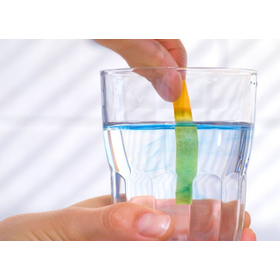
There are precise instruments and convenient test strips for measuring pH!
The pH, which is fundamental to water quality management. There are two methods for measuring it: using precise instruments and convenient test strips, which are chosen based on the purpose.
■ pH Meter (measures accurately with electricity)
A pH meter is an electrical measuring device that uses an internal glass electrode. When two types of solutions are separated by a glass membrane, a potential difference arises according to the difference in pH between the two. By utilizing this mechanism, the potential generated between the reference solution inside the electrode and the water to be measured is read to accurately quantify the pH. However, to maintain accuracy and reliability, it is necessary to regularly perform "calibration" (adjusting to correct values) not only when starting to use it or when replacing the electrode but also during use.
■ pH Test Strips (easy determination by color)
pH test strips are paper that determines the approximate pH of a liquid by color change. They start as green, and when immersed in a liquid, they change from red (acidic) to green (neutral) to blue (alkaline) depending on the pH. For example, if a strong acid like sulfuric acid is present, it will show red. While they are less accurate than instruments in terms of numerical precision, their strengths lie in the fact that they do not require power or calibration, allowing for quick assessments of acidity or alkalinity on the spot.
The appropriate methods for pH management and water quality measurement according to your needs are explained in this document. Please download the document!